Skip to content


What’s changing in how people work, grow, and decide in Fintech
Every year, fintech gets talked about from the outside in. Funding rounds, market trends, and AI disruption. But rarely does anyone stop and ask the people actually working in it how they feel.
That gap is what pushed us to do this, and we created this report because something wasn’t adding up. We spoke with more than 420 fintech professionals across roles, seniority levels and geographies, and asked them one straightforward question: What is really going on in your career right now?
When we looked at the data, the story was harder to ignore than we expected. The number one reason people leave their jobs isn’t pay. It’s a lack of career progression, cited by 62.9% of respondents. Culture and leadership follow closely behind. Yet when those same people are asked why they’d join a new role, salary jumps straight to the top at 68.1%. People leave for reasons organisations often ignore, and join for reasons organisations think they’ve already solved. That gap is where most talent strategies fall short. Salary may attract people, but what keeps them is much more human: leadership, growth, and the overall experience of work.
Beyond career motivation, a few other things stood out. Nearly 3 in 10 professionals experience frequent burnout, and the data shows clearly that hybrid working helps, full office doesn’t. On learning and development, 63% say it matters to them, yet 77% are unsatisfied with what their organisation actually provides. And when it comes to AI, the mood isn’t panic, it’s quiet pressure. Most professionals accept that AI is reshaping their work, but those in organisations with no visible AI direction are starting to see that as a red flag.
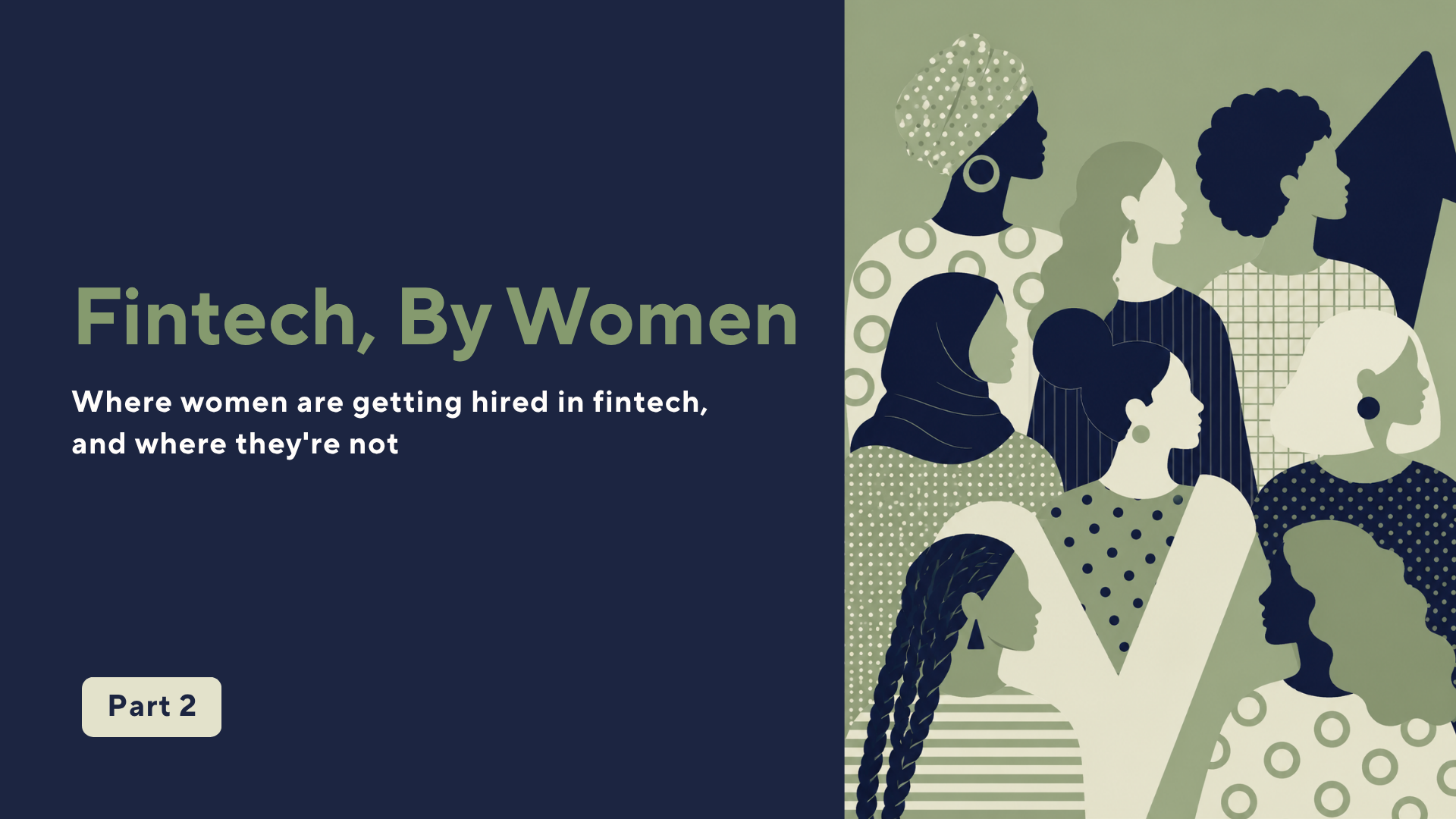
There is also a structural reality that sits underneath all of this. Across 20 European fintech companies and more than 8,000 hires, only 1 in 4 new hires was a woman. The functions where women are most represented are also the smallest. The leadership pipeline is being shaped right now, and the current trajectory points in one direction.
The picture that emerges is of a workforce that is thoughtful, self-aware, and increasingly selective. They are not just looking for better pay. They want to know where they are headed, whether the organisation they work for is going somewhere, and whether they will grow along the way. For employers, that is both the challenge and the opportunity.